
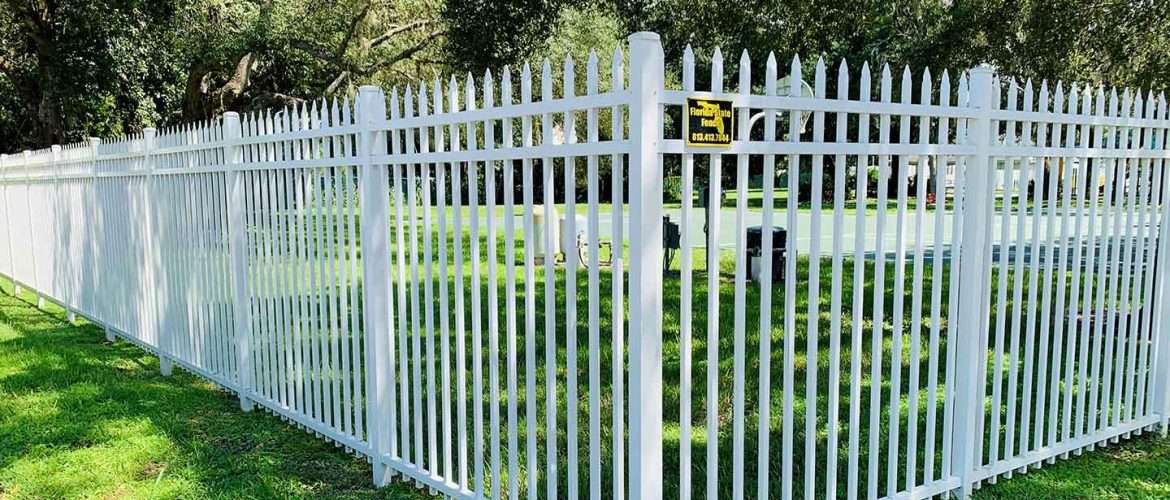
Choosing between an aluminum fence vs a vinyl fence is one of the most common decisions Central Florida homeowners face when it’s time to add or replace a fence. Both materials are well-suited to Florida’s climate, are widely installed across the region, and can serve you well for decades—but they’re built for different purposes. From the Tampa Bay area to the Ocala countryside, Florida State Fence helps homeowners work through this exact decision every day. The right answer usually comes down to which material’s design will best meet your fencing goals.
Quick Answer: Which Fence Is Right for You?
If your priority is pool enclosure, an open view, coastal durability, or HOA compliance for a street-facing fence, aluminum is almost certainly your material.
If your priority is backyard privacy, pet containment behind a solid barrier, or noise reduction, vinyl is typically the stronger fit.
Both fencing materials are low-maintenance, Florida code-compliant when installed correctly, and available in a range of styles and colors. The sections below break down how they compare across the factors that matter most to Central Florida homeowners.

Aluminum vs. Vinyl: Side-by-Side Comparison
Here’s how the two materials stack up across the key decision factors:
| Factor | Aluminum | Vinyl |
| Primary use | Pool enclosures, perimeter, coastal, open views | Backyard privacy, pet containment, noise reduction |
| Privacy | Low (open picket design) | High (solid panels available) |
| HOA acceptance | Very high, often required for street-facing | High, commonly approved for backyard |
| Florida pool code | Yes, flat-top meets code at 48″+ with compliant gate hardware | Yes, with correct height and gate hardware |
| Wind resistance | Strong (open pickets allow airflow) | Good when reinforced with adequate post depth |
| Coastal/salt air | Excellent (aluminum does not rust) | Good (no metal to corrode) |
| UV and heat durability | Excellent (powder-coated finish) | Good (UV inhibitors built into material) |
| Maintenance | Minimal (hose rinse, occasional soap) | Minimal (hose rinse, watch for mildew) |
| Typical lifespan in FL | 30-50+ years | 20-30+ years |
| Typical installed cost | $25-$45 per linear foot | $20-$35 per linear foot |
| Style options | Flat-top, spear-top, ornamental, picket | Privacy, semi-privacy, picket, ranch rail |
| Common colors | Black, bronze, white (custom available) | White, tan, gray, wood grain options |
| Pet containment | Yes (with proper picket spacing) | Yes (especially full-privacy styles) |
Durability in Florida’s Climate
Both vinyl and aluminum fences perform well in Florida’s climate where they must contend with intense sunshine, high humidity, and regular severe weather. However, there are a few indicators that may help guide you toward the choice that will work best for you and for where your property is located in relation to the coast.
Humidity and Rust Resistance
Neither aluminum nor vinyl will rust, which immediately puts both materials ahead of wood and traditional wrought iron in Florida’s humidity. That said, aluminum has a meaningful edge in environments where salt air is a regular factor. Its naturally corrosion-resistant composition, combined with a powder-coated finish, makes it one of the most reliable choices for properties near the coast or along saltwater canals. If your property sits near Tampa Bay or anywhere along Florida’s Gulf Coast, our guide to coastal fencing goes deeper on why material selection matters so much in those conditions.
UV and Heat Performance
Florida sun is relentless, and both materials are engineered to handle it—but not equally at every price point. Aluminum’s powder-coated finish holds its color under prolonged UV exposure without softening or warping, even on the hottest summer days. Vinyl performs well too, thanks to built-in UV inhibitors, but quality varies by grade. Lower-grade vinyl products can soften or warp when exposed to intense heat over time, which is worth keeping in mind when comparing price points. Investing in a higher-grade vinyl product upfront pays off in long-term appearance and structural integrity.
Wind and Storm Performance
This is one of the more nuanced parts of the comparison. Aluminum’s open picket design is actually a structural advantage in high-wind conditions: wind passes through the fence rather than pushing against a solid surface, which significantly reduces the load on posts and hardware. Vinyl performs well in wind when it’s installed with sufficient post depth and proper concrete footings, but solid privacy panels do catch more wind by nature of their design. Neither material is fragile, and a properly installed fence in either product should perform well through typical Florida storm seasons.
Privacy
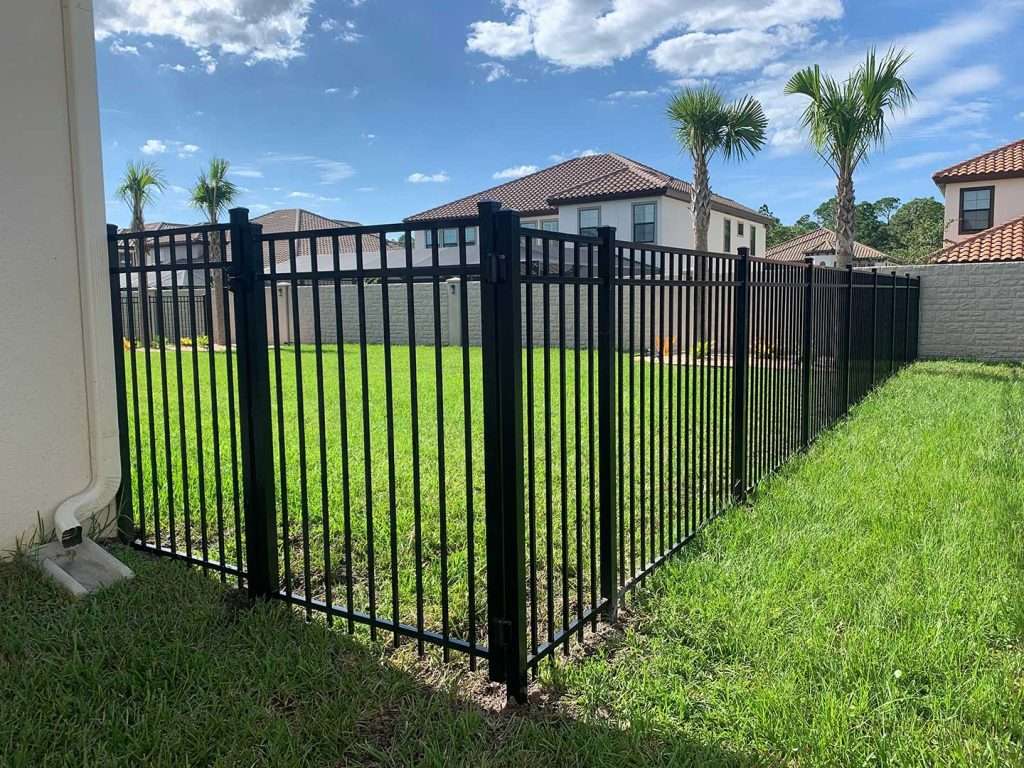
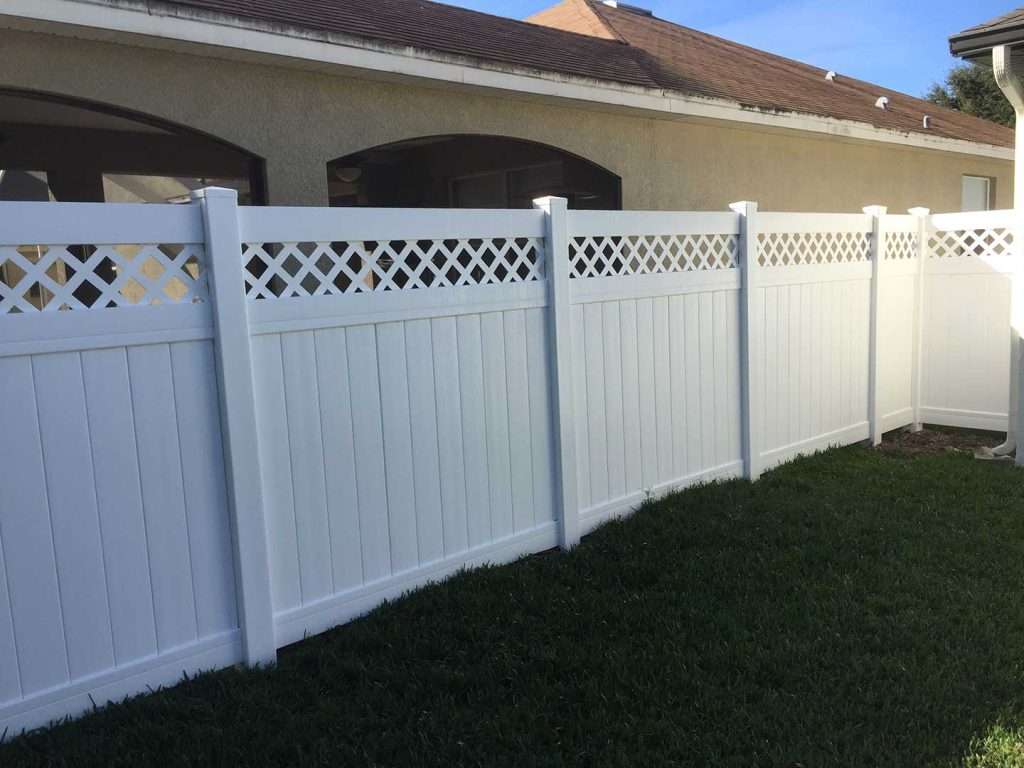
Aluminum fencing is an open-picket product by design. That’s part of its appeal for pool enclosures, front yards, and anywhere you want a defined boundary without blocking sight lines—but it means it won’t give you the screened-in backyard feel that many homeowners are looking for. Vinyl fence installation covers that gap well. Full privacy panels eliminate sight lines from the street or neighboring properties, and semi-privacy options let in light and airflow while still providing visual screening. If a secluded backyard is the goal, vinyl is the practical choice.
Aluminum vs. Vinyl Fence for Pools
Under the Florida Residential Swimming Pool Safety Act, pools built after October 1, 2000 are required to have a compliant pool safety barrier, and fencing is the most common way homeowners meet that requirement. The minimum barrier height is 48 inches, and gates must be self-closing and self-latching, with the latch positioned on the pool side of the gate.
When comparing aluminum vs vinyl for a Florida pool fence, both materials can meet code when installed to spec—but aluminum flat-top fencing is by far the more common choice. Its open picket design gives you an unobstructed view of the water from anywhere in the yard, which is a meaningful safety advantage when children or pets are present. Aluminum also holds up exceptionally well against moisture and chlorine exposure, two things that pool environments produce in abundance.
Florida State Fence handles pool fence installation throughout the Tampa and Ocala service areas and can help you navigate the permitting process from the start.
HOA Rules in Tampa Bay and Central Florida
HOA guidelines add another layer to the material decision, and Central Florida communities tend to follow recognizable patterns. In Tampa Bay suburbs (communities throughout Hillsborough, Pasco, and Pinellas counties), aluminum fence installation is frequently required for street-facing fences. HOAs in these areas typically want a uniform, open look along the front of properties, and aluminum’s classic picket style fits that standard. Vinyl is commonly approved for backyard applications, where privacy is the expected goal and the fence isn’t visible from the street.
That said, rules vary significantly by community, and CC&Rs can be specific about height, color, and style even within approved material categories. Florida State Fence works with homeowners regularly on what’s typically accepted in their area. We’ll confirm what’s approved in your neighborhood’s CC&Rs and assist with getting HOA approval before you commit to a material purchase or begin installation.
Cost Comparison
Aluminum fencing cost typically runs $25–$45 per linear foot installed, while vinyl generally falls in the $20–$35 range—though both figures shift based on style, height, and site conditions.
What the per-foot number doesn’t capture is long-term value. Both aluminum and vinyl carry significantly lower maintenance costs over their lifespans than wood, which requires regular staining, sealing, or replacement of rotted sections.
For homeowners choosing between aluminum vs vinyl fences in Tampa or other Central Florida communities, that long-term lens often shifts the conversation away from upfront cost entirely.
Florida State Fence also offers flexible financing for qualified customers, so the upfront investment doesn’t have to be a barrier to getting the fence you really want.
Maintenance
If you’re looking for a low-maintenance fence in Florida, both aluminum and vinyl deliver, which is a big part of why they’ve become the most popular residential choices across the state.
Aluminum fence maintenance is simple: rinse with a garden hose to clear dust and pollen and use mild soap for anything more stubborn. If the powder coat gets chipped or scratched (from a lawn mower, for example) the finish can be touched up with a matching paint, which prevents any underlying corrosion from taking hold.
Vinyl is similarly easy to care for. A hose rinse handles most routine cleaning, though vinyl surfaces in shaded or humid areas can develop mildew over time; a mild cleaner takes care of it quickly. The key difference between the two materials when something does go wrong: aluminum damage is often repairable at the affected area, while vinyl damage typically means replacing the affected section or panel entirely.
Which Material Is Right for Your Property?
Finding the best fence for your Florida home comes down to what kind of property you’re fencing and why:
- Pool enclosures: Aluminum is the standard choice. Open pickets maintain pool visibility, the material handles moisture and chlorine exceptionally well, and flat-top aluminum meets Florida code when installed to the correct height with compliant gate hardware.
- Backyard privacy: Vinyl wins here. Full privacy panels or semi-privacy styles give you the visual screening that aluminum’s open design simply can’t provide.
- Front yard or street-facing fences: Aluminum is the common choice, and in many HOA communities it’s the only approved option for street-facing applications. Its classic look complements most Florida home styles.
- Coastal properties: Aluminum’s corrosion resistance gives it an advantage anywhere salt air is a factor. Both materials will hold up, but aluminum has the longer track record in coastal conditions.
- Pets and children: Both materials work well. Aluminum keeps animals contained with proper picket spacing; vinyl full-privacy panels are another solid option, particularly for dogs that are reactive to visual stimuli from neighboring properties.
- Large residential or acreage properties: Aluminum is frequently the better fit for perimeter fencing on larger lots — it’s cost-effective at scale, durable across varying terrain, and low enough maintenance to be practical over a large linear footage. The benefits of aluminum fencing for residential properties are worth reviewing if you’re weighing it for a larger installation.
Ready to Choose? Florida State Fence Can Help.
If you’re still weighing your options, the best next step is an on-site estimate. Measurements, site conditions, and HOA requirements all factor into a recommendation, and there’s no substitute for having an experienced installer take a look.
Florida State Fence serves homeowners across Central Florida from our offices in Tampa and Ocala, covering residential and pool fence installations in both materials. Financing options are available, and every installation comes with manufacturer’s material warranties and a 12 month labor guarantee by Florida State Fence.
Request a free on-site estimate and let’s figure out which fence is the right fit for your property.
Frequently Asked Questions
Is aluminum or vinyl fencing better for Florida’s climate?
Both materials are well-suited to Florida’s heat and humidity. When weighing the decision between a vinyl vs aluminum fence as a Central Florida homeowner, aluminum has an edge in coastal or salt-air environments due to its corrosion resistance and durable powder-coated finish, while vinyl performs better where privacy is the priority. The deciding factor is almost always your specific fencing goals rather than climate performance alone.
Does aluminum fencing meet Florida pool code requirements?
Yes. Aluminum flat-top fencing meets Florida pool barrier requirements when installed at a minimum height of 48 inches with a self-closing, self-latching gate and the latch positioned on the pool side. Hillsborough County may have additional inspection requirements beyond the state baseline; Marion County follows the Florida standard. Florida State Fence will verify the current local requirements with your building department before installation.
Which fence is better for a private backyard in Florida?
Vinyl is the better choice for backyard privacy. Full privacy panels eliminate sightlines completely, while semi-privacy styles allow airflow while still blocking most visibility. Aluminum’s open-picket design is not suited for privacy applications by nature of how it’s constructed.
How long does aluminum fencing last in Florida?
Aluminum fencing typically lasts 30–50 years or more in Florida’s climate. Its powder-coated finish resists UV degradation and corrosion, and the material itself doesn’t rot, warp, or rust. Lifespan depends on installation quality, proximity to salt air, and routine maintenance.
How much does aluminum or vinyl fencing cost in Tampa?
Aluminum fencing in the Tampa area typically runs $25–$45 per linear foot installed. Vinyl generally falls in the $20–$35 per linear foot range. Final pricing varies based on fence height, style, gate count, and site conditions. Florida State Fence provides free on-site estimates for accurate project pricing.
Which fence do HOA communities in Tampa Bay typically require?
Most Tampa Bay HOA communities require or strongly favor aluminum for street-facing fences, citing its open, uniform appearance. Vinyl is commonly approved for backyard applications. Rules vary by community, so reviewing your CC&Rs and obtaining written HOA approval before installation is always recommended. Florida State Fence assists homeowners with this process.
Originally Published: 08/01/2024
Last Updated: 04/02/2026


